November 20th, 2026
Distribution Transformer Maintenance: Key Practices for Long Term Performance
A distribution transformer plays a critical role in delivering electricity safely and efficiently to homes, commercial buildings and industrial facilities. It reduces voltage from distribution networks to levels suitable for end users. Since these units operate continuously and experience changing electrical loads and environmental conditions, regular maintenance is essential for dependable performance.
Maintaining a Distribution Transformer in India requires a planned approach that combines routine inspections, condition monitoring and timely corrective action. A consistent maintenance programme helps identify developing faults, reduce unplanned outages and extend equipment service life.
1. Carry Out Routine Visual Inspections
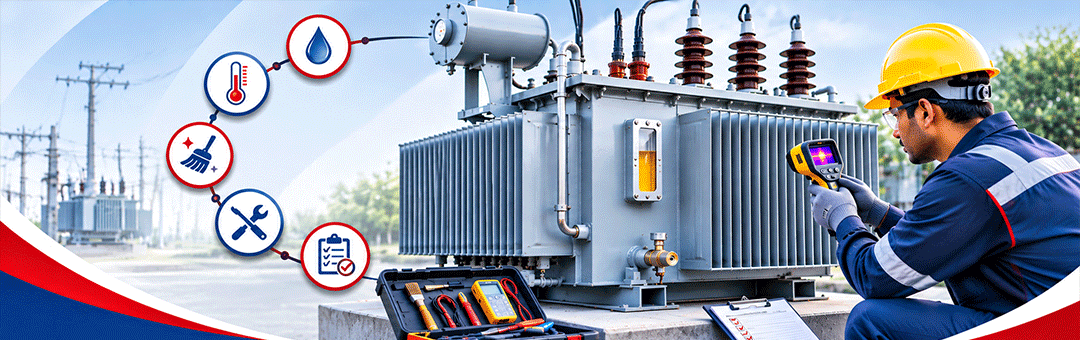
Visual inspections are among the simplest ways to identify early signs of transformer trouble. Check the tank, radiators, cooling equipment, bushings, conservator, valves and connections for damage, corrosion, oil leakage or unusual deposits.
Inspect the surrounding area as well. Ensure ventilation openings are clear, debris is removed and access to the unit is not obstructed. Look for loose cable connections and signs of overheating around terminals.
A documented inspection schedule helps maintenance teams identify recurring problems. This is particularly important for a Distribution Transformer in India operating in locations exposed to high temperatures, dust, humidity and seasonal weather changes.
2. Monitor Transformer Oil Condition
In oil immersed transformers, insulating oil performs two essential functions: providing electrical insulation and transferring heat away from internal components. Changes in oil quality can indicate deterioration or potential internal faults.
Oil sampling and testing should follow the manufacturer’s recommendations and applicable standards. Depending on operating conditions, tests may assess dielectric strength, moisture content, acidity and dissolved gases.
Dissolved gas analysis can help identify certain developing faults. However, results should be interpreted by trained specialists alongside other operating data.
If oil quality falls outside recommended limits, appropriate measures may include filtration, dehydration, oil treatment or further investigation. Simply topping up oil without identifying the cause of deterioration may leave the underlying problem unresolved.
3. Check Temperature and Cooling Performance
Excessive heat can accelerate insulation ageing and reduce transformer service life. Monitor oil and winding temperature indicators, where fitted, and compare readings with the manufacturer’s specified operating limits.
Cooling systems also require regular attention. Inspect radiators, fans and pumps for blockages, leaks, vibration and unusual noise. Confirm that automatic cooling equipment operates correctly. Keep the surrounding space clear to allow effective heat dissipation.
Temperature monitoring becomes particularly important when electricity demand changes across different seasons. A well maintained Distribution Transformer in India should be evaluated according to its loading pattern, ambient temperature and cooling arrangement.
4. Inspect Electrical Connections and Protection Systems
Loose, corroded or damaged connections can create localised heating, voltage irregularities and avoidable energy losses. During scheduled maintenance, qualified technicians should inspect terminals, cable connections, earthing arrangements and accessible contact points.
Thermal imaging can help identify abnormal hot spots while equipment is operating, provided appropriate safety procedures are followed.
Protection devices are equally important. Check that relays, fuses, circuit breakers and surge protection equipment are suitable for the installation and maintained according to their specifications. Verify that earthing connections are secure and protection settings are reviewed by authorised personnel.
Electrical tests, including insulation resistance testing, should be selected according to the transformer’s design and condition. All testing must be performed by competent personnel using appropriate procedures.
5. Track Load and Operating Conditions
Overloading can cause excessive heating and accelerate insulation deterioration. Regularly record load current, voltage, temperature and recurring fluctuations. Compare actual demand with the transformer’s rated capacity and investigate persistent imbalances between phases.
Load monitoring also supports better capacity planning. If electricity demand is expected to increase, operators can evaluate whether load redistribution, network improvements or additional capacity may be required.
When evaluating equipment from a Distribution Transformer Manufacturer in India, consider the expected load profile, installation environment, efficiency requirements and available technical support before selecting a unit.
6. Maintain Records and Follow a Planned Schedule
Maintenance becomes more effective when inspections and test results are documented consistently. Maintain records of oil reports, temperature readings, load measurements, repairs, component replacements and protection system checks.
These records help maintenance teams identify gradual changes, plan interventions and make informed decisions about equipment refurbishment or replacement.
Maintenance intervals should reflect the manufacturer’s guidance, operating conditions, site requirements and applicable standards. Transformers operating in demanding environments or critical installations may require more frequent condition checks.
A reliable Transformer Manufacturer in India should provide technical documentation, operating guidance and maintenance recommendations for the equipment supplied. Following these instructions helps ensure that site maintenance practices align with the transformer’s design and intended operating conditions.
Building Reliability Through Preventive Maintenance
Transformer maintenance is not limited to responding when a fault occurs. It is an ongoing process of monitoring equipment condition, understanding operating trends and addressing potential problems before they develop into major failures.
Routine inspections, oil analysis, thermal monitoring, electrical checks and accurate maintenance records contribute to a more dependable distribution network.
Choosing equipment from an experienced Distribution Transformer Manufacturer in India and following a structured maintenance programme can support operational reliability and long term performance. Working with a technically capable Transformer Manufacturer in India also helps ensure that equipment selection, documentation and maintenance requirements are understood from the beginning.
A carefully maintained Distribution Transformer in India can deliver dependable service throughout its intended operating life. By combining preventive maintenance with informed technical support, operators can reduce avoidable downtime, manage asset condition and maintain a stable supply of electricity.