September 10th, 2025
Transformer Oil Testing & Lifecycle Management
Modern power networks rely very highly on transformers, and the stability of the electrical supply is directly impacted by their dependability. The state of the transformer’s insulating oil is among its most important components. Transformer oil has several uses, such as cooling, insulation, defence against impurities and moisture etc. Thermal stress and contamination cause the oil to deteriorate over time, which can negatively affect a transformer’s lifespan and functionality. Ensuring efficient oil testing and lifecycle management has become a very important procedure for any transformer manufacturer in India to uphold quality standards and client confidence.
Importance of Transformer Oil Testing
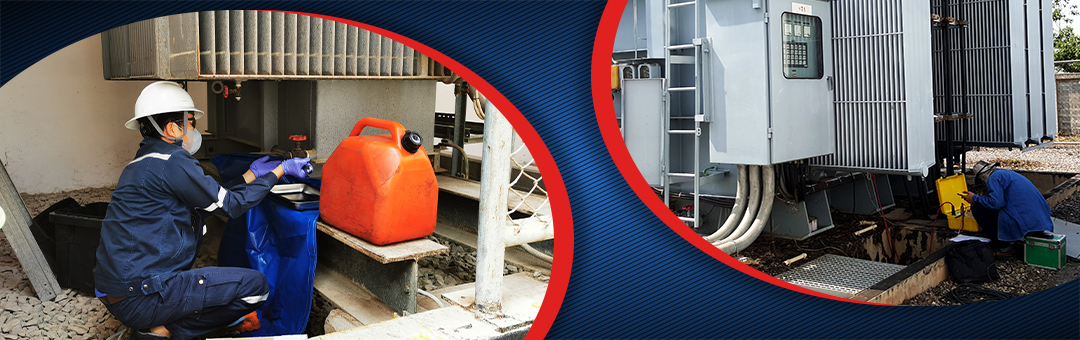
Transformer oil is much more than just being a passive substance as it actively strengthens the transformer’s dielectric and guarantees safe operation. As the transformers operate, impurities like moisture and solid particles build up. Frequent testing helps to identify these contaminants’ presence before they result in irreparable harm. To evaluate the state of oil, tests like breakdown voltage testing and dissolved gas analysis are frequently employed.
A failed transformer can result in expensive downtime and power supply interruptions for utilities. Regular oil tests are relatively inexpensive, but replacing a transformer entirely comes at a huge cost. Guaranteeing that transformers not only satisfy operational requirements at the point of delivery but also continue to operate dependably throughout their service life, transformer manufacturers are thus placing a high priority on sophisticated oil testing facilities.
Lifecycle Management of Transformer Oil
The methodical process of monitoring and maintaining transformer oil in order to increase the transformer’s service life is known as lifecycle management. When the transformer is first put into service, extensive testing is the first step in the process. The oil is routinely sampled and examined to monitor the rate of degradation as the equipment ages. Remedial measures like filtration, dehydration, or total replacement may be implemented in response to test results.
A structured lifecycle management programme reduces the likelihood of sudden failures. By anticipating when interventions are necessary rather than depending on reactive measures, it also assists utilities in optimising maintenance costs. Nowadays, every transformer manufacturer in India helps their clients by providing lifecycle management services, which guarantee that their goods will continue to be dependable and reasonably priced for many years to come. The power industry’s increasing understanding of the importance of long-term support is reflected in this move from a supply-only model to a service-oriented approach.
Role of Indian Manufacturers in Advancing Practices
Indian manufacturers are making significant investments in research and development to improve the longevity and efficiency of transformers in response to the growing demand for dependable electricity. Testing and lifecycle management of transformer oil have become very important components of this advancement. Real-time insights into transformer health are being obtained through the integration of contemporary diagnostic tools, including sophisticated laboratory techniques and online monitoring systems.
Raising the bar for oil testing and management also calls for the transformer manufacturers to work with utilities and academic institutions. They guarantee adherence to international quality standards and forge closer bonds with clients by creating creative service packages. In India, where severe weather patterns and high load cycles further strain power equipment, this emphasis on lifecycle support is especially important.
The responsibilities of a transformer manufacturer in India now go beyond simple production to include client education and training. To reduce risks and the impact on the environment, utilities and industries are being advised on best practices for handling and disposing of oil. Supplementing the improvement of the power sector’s sustainability, these initiatives highlight manufacturers’ obligations to provide value throughout the whole lifecycle of their products.
Transformer lifecycle management and oil testing are very important procedures for guaranteeing the dependability and effectiveness of transformers. Lifecycle management guarantees prompt intervention and cost optimisation, and routine oil testing finds early warning indicators. Every transformer manufacturer in India is making a contribution in this area, which is strengthening the country’s electrical infrastructure. Indian manufacturers are spearheading the shift to a more dependable and sustainable energy future by fusing technical know-how with long-term service models.
Additional Reading: