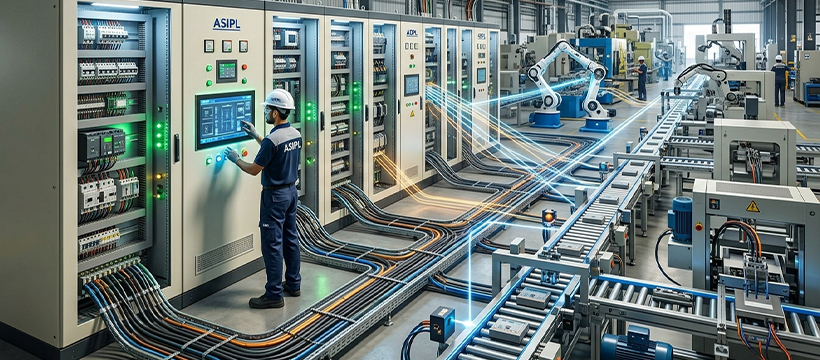
Why Control Panels Are the Backbone of Automated Systems?
Date: April 25th, 2026
Automation is no longer a luxury—it’s the foundation of modern industry. From manufacturing plants and power distribution to building management systems, automation drives efficiency, precision, and scalability. At the core of these systems are electrical control panel, quietly acting as the brain behind every operation. They manage, monitor, and control processes, ensuring everything runs smoothly and in sync.
What Are Electrical Control Panels?
Control panels are enclosures that house critical electrical components such as circuit breakers, relays, PLCs (Programmable Logic Controllers), and VFDs (Variable Frequency Drives). These components work together to control machinery and processes efficiently. Without control panels, automated systems would lack coordination and reliability.
Centralized Control for Seamless Operations
One of the biggest advantages of control panels is their ability to centralize operations. In any industrial setup, multiple machines and processes must function together. Electrical control panel bring everything into a unified system, allowing operators to monitor and control operations from a single point.
Why Centralization Matters?
By consolidating control, businesses can reduce manual intervention and minimize errors. Operators gain better visibility into processes, enabling quicker decisions and improved productivity.
Precision That Drives Performance
Automation depends heavily on accuracy, and electrical control panels ensure that every action is executed with precision. They receive input from sensors, process data, and send commands to machinery in real time.
Maintaining Accuracy in Every Operation
Whether it’s controlling temperature, managing motor speeds, or regulating energy usage, control panels ensure consistency. This level of precision is crucial in industries where even minor deviations can lead to major losses.
Safety at the Core of Every System
Industrial environments involve high-risk operations, making safety a top priority. Control panels are designed with built-in safety mechanisms that protect both equipment and operators.
Built-in Protection Mechanisms
From overload protection to emergency shutdown systems, control panels help prevent accidents and reduce risks. They also provide real-time alerts, allowing quick responses to potential issues.
Scalability and Future-Readiness
As businesses grow, their systems need to adapt. Control panels offer the flexibility to scale operations without major disruptions.
Designed to Grow with You
Modern control panels can be customized and upgraded to include new technologies. With IoT integration, they enable remote monitoring and smarter automation, making them ideal for future-ready industries.
Energy Efficiency and Cost Optimization
Control panels play a significant role in improving energy efficiency. By optimizing machine performance, they help reduce unnecessary power consumption.
Smarter Energy Management
Components like VFDs adjust motor speeds based on actual demand, ensuring efficient energy usage. This not only lowers operational costs but also supports sustainable practices.
The Importance of Electrical Control Panels Manufacturing
The effectiveness of any control panel depends heavily on the quality of Control Panels manufacturing. Each industry has unique requirements, and panels must be designed accordingly.
Quality That Ensures Reliability
From selecting the right components to ensuring precise wiring and layout, every detail matters. High-quality Electrical Control Panel manufacturing guarantees durability, performance, and long-term reliability.
Minimizing Downtime Through Reliability
Downtime can lead to significant losses in industrial operations. Reliable control panels ensure uninterrupted performance and consistent output.
Built for Consistency
With proper design and robust Control Panels manufacturing, systems can operate efficiently with minimal risk of failure, helping businesses maintain productivity.
Enabling Data-Driven Decisions
Modern control panels go beyond control—they provide valuable data insights. This data helps businesses optimize processes and improve overall performance.
Turning Data into Action
By analyzing system performance, operators can identify inefficiencies and make informed decisions that enhance productivity and reduce costs.
Supporting Industry 4.0 Integration
As industries move towards smart manufacturing, control panels are becoming even more critical.
Bridging the Gap Between Systems
They act as a link between traditional machinery and advanced digital systems, enabling connectivity, automation, and intelligent operations.
Conclusion
Electrical control panels are truly the backbone of automated systems. They bring together control, safety, precision, and efficiency into one cohesive unit. As industries continue to evolve, the role of Control Panels manufacturing will become even more significant, ensuring systems remain reliable, scalable, and future-ready.